

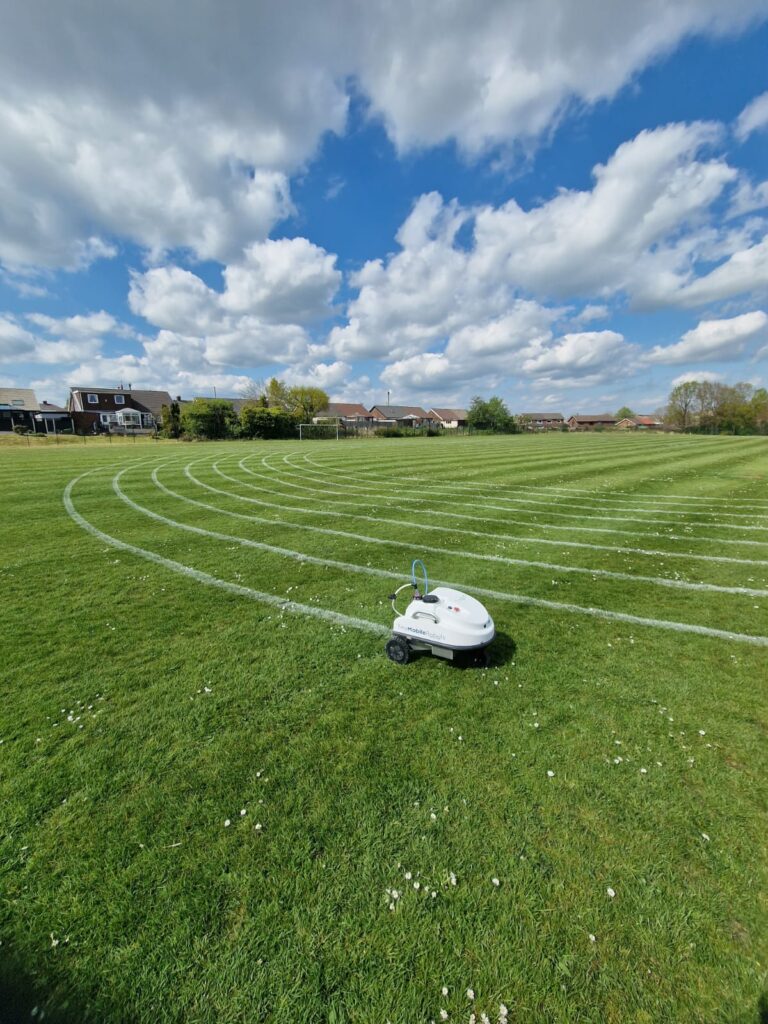
When it comes to maintaining high-quality sports pitches, line marking plays a crucial role—not just in aesthetics but in ensuring regulation compliance and game fairness.
Over the years, technology has revolutionised this process, introducing GPS robot line marking as a modern alternative to traditional manual methods. But how do these two approaches compare?
Traditional line marking relies heavily on manual measurement and setup, often involving strings, tapes, and human judgement. This process can lead to inconsistencies, especially across large or multiple pitches. In contrast, GPS robot line markers use satellite positioning to ensure pinpoint accuracy. The robot follows digital layouts, reducing the risk of misalignment or measurement errors. This is especially valuable for multi-sport facilities where lines need to be re-marked frequently and precisely.
Manual marking is time-consuming and labour-intensive. It typically requires multiple people and can take hours to complete a single pitch—time that could be better spent on other groundskeeping tasks. GPS-guided robots, however, operate autonomously and can complete a pitch in a fraction of the time—up to seven times faster. They require minimal supervision, freeing up staff to focus on other maintenance duties. This also has a significant impact on the amount of time staff are on site, potentially leading to disruption of lessons or practice sessions.
One of the standout benefits of GPS marking is its consistency. Once a pitch is digitally mapped, the robot can replicate the exact layout every time, without the need for re-measuring. Traditional marking, on the other hand, often varies from one marking session to the next, especially if different staff members are involved or the pitch lacks permanent reference points.
Robotic line markers typically use paint more efficiently, applying just the right amount to each line. This not only saves on materials but reduces environmental waste. Traditional methods often lead to over-spraying and paint runoff, which can negatively impact the surrounding turf and soil.